

U INTER : ค้นหาหนังสือธรรมะ หน้า 35 / 48
หน้าหนังสือทั้งหมด
111
The Path to Self-Development and Ethical Living
Suzanne Jeffrey
tions, although in the beginning of our life, when we are developing our habits, our six
directions give us total input - in other words, we are in-taking all the information that
wil
This text discusses the importance of self-development through six directions, emphasizing the role of ethical living and the teachings of Buddha in understanding one's mind and actions. It highlights
117
Understanding Mara and Meditation
Suzanne Jeffery
Q: Does Mara exist? What does Mara look like?
A: Yes. Mara exists. Khun Yai used to say that Mara is Mara. Mara does not like good deeds and Mara always interferes. Mara cannot stop
In this content, Suzanne Jeffery discusses the existence of Mara, describing it as an entity that interferes with our ability to perform good deeds. Although Mara cannot prevent goodness, it can prese
128
Mappings with a Dharma Master
Mappings with a Dharma Master
we first start with our own individual self and then work outward in all directions.
“The six directions start with the smallest unit, ourselves. We are in the center o
The text discusses the importance of individual self-awareness and ethical behavior in shaping relationships and society. It emphasizes that one must start with self-improvement through meditation and
129
The Formation of Habits and Teaching Morality
Suzanne Jeffrey
which will lead to destructive thoughts and eventually into darkness. So, as we can see,
different habits lead to different lives. All of our habits come from our early training.
“Ho
This text discusses how habits develop from early training and repeated actions, and emphasizes that both good and bad habits influence our lives. It highlights the need for teachers to first correct
141
The Downfall of Empires and the Path to Moral Society
Networking with a Dharma Politizer
We worship money as God and morality is lost. When we do this, we begin to associate with ‘bad’ people, or people who lead us away from the very thing that would he
In examining the decline of empires, we find a key factor in the worship of money, leading to a loss of morality. This disintegration results in laziness and dependency on society. Understanding the R
147
Meditation Technique: The Seven Bases of the Mind
Suzanne Jeffrey
Step-By-Step introductions for the meditation technique:
The Seven Bases of the Mind.
1. The sitting posture, which has been found to be the most conducive for meditation, is the hal
This guide introduces the Seven Bases of the Mind meditation technique, emphasizing the importance of proper posture, relaxation, and focus. Begin by adopting a comfortable half-lotus position or sitt
150
Meditation Techniques for Inner Peace
eyelashes to lightly touch your cheeks, as though you are falling asleep. (Please do not force your eyelids closed or squeeze them shut because that causes tension in this area, as well as other areas
In this guided meditation practice, you will learn to relax by closing your eyes and focusing on your inner self. Start by gently closing your eyes, smile internally, and take deep breaths to relax yo
156
Glossary of Important Terms in Enlightenment
Glossary
Arahant – Someone who has attained enlightenment (or no longer has defilement). This person is free from greed, delusion, ignorance and such things as that.
Baap – The bad stuff that’s floa
This glossary provides definitions of essential terms in the context of enlightenment and mindfulness practices. It discusses concepts such as Arahant, individuals who have achieved enlightenment free
157
Understanding Dhamma and the Eightfold Noble Path
Sucone Jeffray
life, and depend on ourselves. They usually live for a really, really, really long time (like hundreds of thousands of years) until they deplete their good kamma.
Dhamma – (Sanskrit:
The text discusses the concepts of Dhamma, meditation, and the Eightfold Noble Path as essential elements leading to true understanding and happiness. It emphasizes that true nature and enlightenment
13
The Root of Social Problems
THE ROOT OF SOCIAL PROBLEMS
T HE ROOT OF SOCIAL PROBLEMS
M any blame the scarcity of lasting happiness on the disarray of modern culture. Family breakdown, violent crime, suicide, deterioration of e
This text discusses how many societal issues, such as family breakdown, crime, and education deterioration, stem from the neglect of our own minds. It argues that the quality of our minds significantl
15
Taming the Mind to Raise its Quality
TAMING THE MIND TO RAISE ITS QUALITY
Meditation is a legacy passed down from the wisdom of the ancients. The ancients recognized the need to preserve the quality of the mind and placed more importanc
Meditation is an ancient practice aimed at preserving the mind's quality over material wealth. The ancients knew that true prosperity lies in inward focus, connecting with the center of our being. By
19
A Brief History of Wat Phra Dhammakaya: A Spiritual Oasis
B RIEF HISTORY
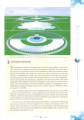
1 In the midst of the daily rush and bustle demanded by modern metropolitan life has grown up a unique cultural centre to encourage and awaken people to the transformation that can be
Wat Phra Dhammakaya, located 16 km north of Bangkok, promotes a culture of peace through meditation. Founded amidst cultural turbulence, it emphasizes spiritual over material values, aiming for world
21
Provision of Facilities for Meditation at Dhammakaya Foundation
ROVISION OF FACILITIES
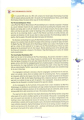
W t h e steady increase of interested public coming to study meditation and culture for the raising of the quality of the mind, the Dhammakaya Foundation has led the way in the
The Dhammakaya Foundation has developed purpose-built facilities to enhance the practice of meditation, accommodating a large number of meditators and fostering a serene environment. With a covered ca
23
WORLD DHAMMAKAYA CENTRE
WORLD DHAMMAKAYA CENTRE
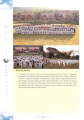
O n its present 800 acres site, WDC will comprise the Great Sapha Dhammakaya Assembly Hall (the largest spiritual assembly hall in the world), the Phramonkollthepmuni Vihara,
The World Dhammakaya Centre spans 800 acres and includes the Great Sapha Dhammakaya Assembly Hall, the largest spiritual hall globally, and the Phramonkollthepmuni Vihara, dedicated to the revered med
32
Week-long Meditation Retreats
Week-long Retreats
The training of the mind to achieve inner peace requires continuity of training. A seven-day meditation retreat has been organized as a temporary relief from normal, routine commit
The seven-day meditation retreat provides a space for individuals to escape the routine of daily life and immerse themselves in nature. Held in scenic locations like Chiangmai and Phuket, these retrea

61
Dhammakaya Foundation's Educational Media
Cassettes
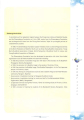
For the convenience in spreading Dhamma to youth around the country, Dhammakaya Foundation has produced video and audio cassette teaching materials on subjects including meditation instructi
The Dhammakaya Foundation produces a range of video and audio teaching materials, including meditation instructions, Dhamma music, and chantings to engage youth across Thailand. It operates 10 daily r
65
Exchange Activities of Dhammakaya Foundation and Chung-Hwa Institute
Exchange Activities
In accordance with an agreement signed between the Chung-Hwa Institute of Buddhist Studies and the Dhammakaya Foundation on 5 July 1990, monks from the Dhammakaya Foundation are ex
The Dhammakaya Foundation has been actively engaged in exchange activities since 1990, collaborating with the Chung-Hwa Institute of Buddhist Studies for prolonged studies. Notable partnerships includ
67
Dhammakaya Foundation's Role in Promoting Peace
United Nations: Non Governmental Organizations
Since August 1986 the Dhammakaya Foundation has become the United Nations - accredited Non-Governmental Organisation associated with the Department of P
The Dhammakaya Foundation has been a UN-accredited NGO since August 1986, actively participating in various peace initiatives, including the Millennium People's Assembly and the International Year for
71
Growth of Dhammakaya Foundation's Global Influence
ROM QUALITY GREW QUANTITY
The reputation for training offered by the Dhammakaya Foundation has spread primarily by word of mouth, increasing the popularity of activities held, as the years pass by. P
The Dhammakaya Foundation's dedication to meditation training has led to a significant reputation, expanding through word of mouth and enhancing lives. Local branches in Thailand and abroad facilitate
73
Magha Puja Day 1999 Celebration
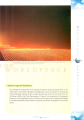
Magha Puja Day 1999 - More than 100,000 monks and faithful Buddhist From all over the world participated in the Candle lighting festival to pay homage to the Triple Gem.
FOR WORLD PEACE
Festival of
Magha Puja Day 1999 welcomed over 100,000 monks and dedicated Buddhists worldwide to celebrate the Candle Lighting Festival, paying homage to the Triple Gem. This event underscores the significance of